
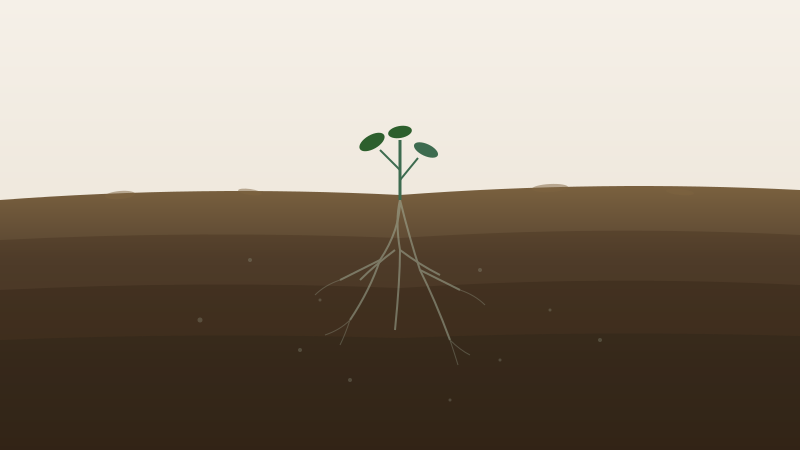
Why Soil Matters More Than the Plants You Choose
Here’s something most landscapers won’t tell you: the plants you pick matter a lot less than what’s underneath them.
I’ve seen it over and over in Columbia — beautiful plants go in the ground, look great for a few weeks, and then slowly decline. The homeowner blames the variety, the weather, or the amount of water. But nine times out of ten? It’s the soil.
The Problem with “Plant and Pray”
The standard approach in our industry is to dig a hole, drop in a plant, backfill with whatever was there, and move on. Maybe add some mulch on top. That works fine if your existing soil is healthy. But in a lot of Columbia neighborhoods — especially newer developments where the topsoil was scraped during construction — what’s left is compacted clay with almost no organic matter.
Plants can survive in that. They can’t thrive.
What Healthy Soil Actually Does
Good soil isn’t just “dirt.” It’s a living ecosystem that:
- Holds moisture without becoming waterlogged
- Drains properly so roots don’t rot
- Provides nutrients plants need to grow strong
- Supports beneficial organisms (earthworms, fungi, bacteria) that keep the whole system working
When I start a project, the first thing I look at is the soil. Not because it’s the exciting part — but because everything else depends on it.
My Soil-First Approach
Here’s what I do differently:
- Test the soil — I look at composition, drainage, and organic content
- Amend before planting — compost, organic matter, and when needed I bring in clean topsoil instead of trying to chase pH adjustments
- Choose plants that match — instead of fighting the soil, I work with it and select plants suited to the conditions
- Protect the topsoil — I use all-electric equipment specifically because heavy gas-powered machines compact soil and damage its structure
It’s more work upfront. But the results last years instead of months.
What This Means for Your Yard
If you’ve had plants die on you, or your landscape never quite looks as good as the day it was installed — your soil is probably the reason. The good news is that soil can be improved. It’s not a quick fix, but it’s a permanent one.
Whether you’re planning a new landscape or trying to figure out why your existing one isn’t performing, start with a conversation. I’ll walk your property, look at what’s going on below the surface, and give you honest advice.
Because the best landscapes start from the ground up.

Tony Yuhas
Owner of Terraformed Homes. I do the design, the install, and everything in between — personally, on every project in Columbia, MO.
About Tony